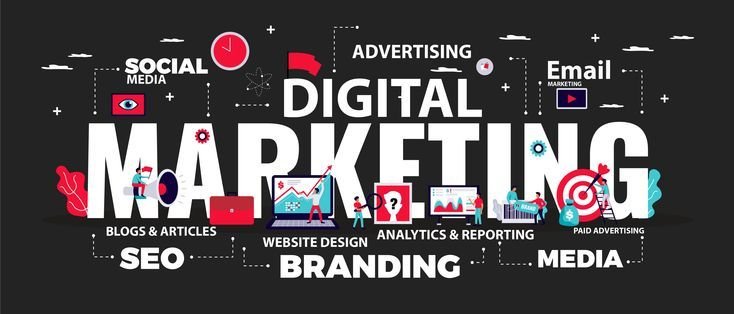
The digital landscape is changing faster than ever. Businesses that once relied primarily on traditional advertising are now investing heavily in online channels to reach customers, build awareness, generate leads, and increase sales. As technology continues to evolve, the role of a Digital Marketing Agency is becoming increasingly important for businesses of every size.
A modern Digital Marketing Agency is no longer limited to managing social media accounts or running paid advertisements. Today, a Digital Marketing Agency can combine search engine optimization, content marketing, artificial intelligence, data analytics, automation, social media, email marketing, influencer marketing, and conversion optimization to create complete digital growth strategies.
The future of the Digital Marketing Agency industry will be shaped by technological innovation, changing customer expectations, privacy regulations, artificial intelligence, and the growing demand for personalized experiences. Companies that understand these changes will be better positioned to compete in an increasingly digital economy.
In this article, we will explore the future of the Digital Marketing Agency, the technologies transforming the industry, emerging trends, and what businesses should expect from digital marketing services in the coming years.
What Is a Digital Marketing Agency?
A Digital Marketing Agency is a company that helps businesses promote their products, services, and brands through digital channels. These channels can include search engines, websites, social media platforms, email, online advertising, content platforms, and other internet-based technologies.
A traditional may offer services such as SEO, pay-per-click advertising, social media marketing, content creation, email marketing, web development, and analytics.

However, the modern Digital Marketing Agency is evolving into a strategic growth partner. Instead of simply executing individual campaigns, a forward-thinking Digital Marketing Agency uses customer data, technology, automation, and creative strategies to understand audiences and improve business performance.
This transformation is one of the biggest reasons the future of the Digital Marketing Agency industry looks increasingly technology-driven.
Why the Future of Digital Marketing Agency Is Important
Consumer behavior has changed dramatically. People search for information online, compare products through websites and social media, read reviews, watch videos, and communicate with brands through digital platforms.
As customers spend more time online, businesses need a strong digital presence. This creates opportunities for a Digital Marketing Agency to help organizations reach their target audiences more effectively.
The future Digital Marketing Agency will focus less on simply generating traffic and more on generating measurable business outcomes. Leads, sales, customer lifetime value, retention, engagement, and brand loyalty will become increasingly important performance indicators.
Businesses will also expect their Digital Marketing Agency partners to understand technology, data, consumer psychology, branding, and business strategy.
Artificial Intelligence and the Future of Digital Marketing Agency
Artificial intelligence is one of the most important technologies shaping the future of marketing.
A modern Digital Marketing Agency can use AI to analyze large amounts of data, identify patterns, generate content ideas, automate repetitive tasks, personalize customer experiences, and improve campaign optimization.
AI can help a Digital Marketing Agency understand which audiences are responding to particular messages and which marketing channels are producing meaningful results.
However, artificial intelligence will not eliminate the need for human creativity. Instead, the future Digital Marketing Agency will combine AI-powered tools with human strategy, creativity, storytelling, and critical thinking.
AI can produce information quickly, but marketers still need to understand brand identity, customer emotions, cultural context, and business objectives.
This means the successful Digital Marketing Agency of the future will likely be one that knows how to use AI responsibly rather than simply relying on AI-generated output.
Automation Will Transform Digital Marketing
Marketing automation is another major trend that will influence the future of the Digital Marketing Agency.
Businesses can automate many repetitive marketing activities, including email campaigns, customer segmentation, lead nurturing, reporting, audience targeting, and certain customer communication processes.
A technology-focused Digital Marketing Agency can use automation to save time while maintaining consistency across multiple channels.
For example, when a potential customer downloads a guide from a website, an automated system can send a series of relevant emails designed to educate the prospect and move them toward a purchase decision.
The future Digital Marketing Agency will increasingly use automation to create connected customer journeys rather than isolated campaigns.
Data-Driven Marketing Will Become More Important
Data has always been important in marketing, but its role will become even more significant.
A data-driven Digital Marketing Agency can examine website traffic, customer behavior, conversion rates, advertising performance, search trends, and other measurable signals.
Instead of making decisions based purely on assumptions, a Digital Marketing Agency can use data to determine which strategies are working and where improvements are needed.
However, data collection is also becoming more complicated because consumers increasingly care about privacy. Future marketing strategies will need to balance personalization with responsible data practices.
The successful Digital Marketing Agency will therefore need strong analytical capabilities as well as an understanding of privacy and compliance requirements.
Personalization Will Define Customer Experiences

Consumers increasingly expect brands to provide relevant experiences. Generic marketing messages may not attract the same level of attention as personalized communication.
A future Digital Marketing Agency will use customer insights to create more relevant content, advertisements, email campaigns, product recommendations, and website experiences.
Personalization can help brands communicate with different customer segments according to their interests, needs, behaviors, and stages in the buying journey.
For a Digital Marketing Agency, personalization will become less of an optional strategy and more of an important part of customer experience management.
The Growth of Voice Search and Conversational Marketing
Search behavior is also changing. Consumers increasingly interact with digital assistants, smart devices, chatbots, and conversational interfaces.
A forward-thinking Digital Marketing Agency will need to understand how people ask questions conversationally and how businesses can provide useful answers.
Conversational marketing can include chatbots, messaging platforms, AI assistants, and interactive customer support.
For the Digital Marketing Agency, this means traditional keyword-focused strategies will increasingly be complemented by strategies designed around questions, intent, context, and useful information.
Search Engine Optimization Is Evolving
SEO will remain an important service for a Digital Marketing Agency, but the nature of SEO is changing.
Search engines are becoming better at understanding meaning, intent, context, and the quality of information. As a result, simply placing keywords repeatedly on a webpage is not enough.
A modern Digital Marketing Agency needs to focus on high-quality content, technical performance, user experience, topical relevance, authority, and search intent.
The future Digital Marketing Agency will also need to adapt as users increasingly discover information through AI-powered search experiences and alternative discovery platforms.
SEO will therefore become broader than traditional search engine rankings.
Content Marketing Will Become More Strategic
Content remains one of the most powerful tools available to a Digital Marketing Agency.
Blogs, videos, podcasts, newsletters, guides, case studies, social media content, and interactive experiences can help businesses educate audiences and establish credibility.
However, the future Digital Marketing Agency will need to move beyond publishing content simply for the sake of publishing.
Content strategies will increasingly focus on answering specific customer questions, demonstrating expertise, building trust, and supporting the customer journey.
A strong Digital Marketing Agency will combine content strategy with SEO, social media, email marketing, paid advertising, and conversion optimization.
Video Marketing Will Continue to Grow
Video has become an essential part of online communication.
Short-form videos, educational videos, product demonstrations, interviews, live streams, and behind-the-scenes content can help businesses connect with audiences in engaging ways.
A creative Digital Marketing Agency will increasingly incorporate video into broader marketing campaigns.
Video can also be repurposed across multiple platforms. A single long-form video can potentially become shorter clips, social posts, blog content, email content, and other marketing assets.
This makes video an efficient component of a modern Digital Marketing Agency content strategy.
Social Media Marketing Is Becoming More Complex
Social media continues to evolve rapidly. New platforms, content formats, algorithms, and consumer behaviors constantly change the way brands communicate online.
A future-focused Digital Marketing Agency will need to understand more than simply posting content.
Social media strategies will increasingly involve community building, social listening, influencer collaborations, paid advertising, short-form video, customer service, and brand storytelling.
The role of a Digital Marketing Agency will also include helping businesses respond quickly to changing audience expectations while maintaining a consistent brand identity.
Influencer Marketing Will Become More Data-Driven
Influencer marketing has moved from being a niche tactic to an important component of many digital strategies.
The future Digital Marketing Agency will increasingly use data to evaluate influencer partnerships based on audience relevance, engagement, content quality, brand alignment, and campaign objectives.
Instead of focusing only on follower counts, a Digital Marketing Agency can examine whether an influencer reaches the right audience and produces meaningful engagement.
Micro-influencers and niche creators may also continue to provide opportunities for brands seeking highly relevant communities.
The Rise of First-Party Data
Privacy changes are encouraging businesses to develop stronger relationships with their own audiences.
First-party data refers to information that businesses collect directly from their customers or users through interactions such as website visits, purchases, subscriptions, registrations, and customer communications.
A future Digital Marketing Agency will help businesses develop strategies for collecting and using first-party data responsibly.
This can include email subscriptions, loyalty programs, customer accounts, surveys, and other consent-based interactions.
The shift toward first-party data will make customer relationships increasingly important to the work of a Digital Marketing Agency.
Customer Experience Will Become a Marketing Priority
Marketing does not end when someone clicks an advertisement.
The complete customer journey includes website experience, product information, checkout, customer service, communication, delivery, and post-purchase engagement.
A modern Digital Marketing Agency will increasingly consider the entire customer experience.
This means a Digital Marketing Agency may work closely with sales, customer service, web development, and product teams to create a consistent journey.
The future Digital Marketing Agency will therefore become more integrated into overall business strategy.
Performance Marketing Will Focus on Business Results
Performance marketing has traditionally emphasized measurable outcomes such as clicks, leads, and conversions.
In the future, businesses are likely to demand even greater accountability from their Digital Marketing Agency partners.
Instead of reporting only impressions and clicks, a Digital Marketing Agency may need to demonstrate how marketing activity contributes to revenue, customer acquisition, retention, and long-term growth.
Better analytics and attribution systems will help businesses understand these relationships more clearly.
The Importance of Omnichannel Marketing
Customers rarely interact with brands through a single channel.
A person may discover a business through search, visit its website, see a social media advertisement, watch a video, receive an email, and eventually make a purchase.
An experienced Digital Marketing Agency can connect these touchpoints into an integrated customer journey.
Omnichannel marketing will become increasingly important because customers expect brands to provide consistent experiences across platforms.
The future Digital Marketing Agency will therefore need to think beyond individual channels and focus on the complete customer ecosystem.
Digital Marketing Agencies Will Become Technology Partners
Technology will play an increasingly central role in marketing.
CRM platforms, analytics systems, advertising technologies, AI tools, automation software, content management systems, customer data platforms, and other technologies are becoming essential to modern marketing.
As a result, a Digital Marketing Agency will increasingly function as a technology partner.
Businesses may rely on their to recommend technologies, integrate platforms, analyze data, automate processes, and create efficient digital systems.
This represents a major evolution from the traditional agency model.
The Future Skills of a Digital Marketing Agency
The marketing professionals of tomorrow will need a combination of creative, analytical, and technical skills.
A future-ready may need specialists in:
-
Artificial intelligence
-
SEO and search strategy
-
Data analytics
-
Content strategy
-
Social media
-
Paid advertising
-
Marketing automation
-
Conversion optimization
-
UX and customer experience
-
Video production
-
Brand strategy
-
CRM and customer data
-
Technology integration
The strongest teams will likely be multidisciplinary rather than dependent on a single marketing skill.
Why Businesses Will Continue Hiring Digital Marketing Agencies
Some businesses may attempt to manage all digital marketing internally. However, the growing complexity of technology can make this difficult.
A specialized provides access to professionals with different areas of expertise.
Instead of hiring separate specialists for SEO, paid advertising, social media, content, analytics, and automation, businesses can work with a that provides integrated services.
An experienced can also bring external perspectives and knowledge of changing digital trends.
For growing businesses, this flexibility can make an agency model attractive.
Challenges Facing the Digital Marketing Agency Industry
The future is promising, but the industry will also face challenges.
Technology changes rapidly, making continuous learning essential. Search algorithms evolve, advertising platforms change their rules, consumer expectations shift, and new competitors enter the market.
AI will also increase competition because businesses can create certain marketing assets faster and at lower costs.
This means a Digital Marketing Agency will need to demonstrate value through strategy, expertise, creativity, technology, and measurable results.
Another challenge will be maintaining authenticity. As AI-generated content becomes more common, businesses may place greater value on original ideas, genuine expertise, human storytelling, and distinctive brand voices.
How to Choose a Future-Ready Digital Marketing Agency
Businesses looking for a Digital Marketing Agency should evaluate more than a list of services.
A future-ready should understand the client’s business objectives and target audience.
Businesses should also consider whether the has experience with data analytics, technology, content strategy, SEO, paid advertising, automation, and conversion optimization.
Communication and transparency are equally important. A reliable Digital Marketing Agency should be able to explain its strategy, objectives, measurement methods, and expected deliverables clearly.
Most importantly, businesses should look for a Digital Marketing Agency that is willing to adapt as technology and consumer behavior change.
What the Digital Marketing Agency of 2030 May Look Like
By the end of this decade, the model may look very different from today’s agency structure.
AI could handle many repetitive operational tasks, while marketers focus more heavily on strategy, creativity, brand development, customer psychology, and decision-making.
A Digital Marketing Agency may operate with smaller specialized teams supported by sophisticated technology.
Automated reporting could provide real-time insights, AI systems could identify campaign opportunities, and personalized customer journeys could be managed across multiple platforms.
However, the fundamental purpose of a will remain the same: helping businesses communicate with the right audiences and achieve meaningful business objectives.
The Human Element Will Still Matter
Despite technological advances, marketing will remain fundamentally human.
People buy from brands they understand, trust, recognize, and connect with.
The future will therefore need to balance technology with human creativity.
AI can analyze information and automate processes, but humans provide empathy, cultural understanding, storytelling, judgment, and emotional intelligence.
The most effective Digital Marketing Agency strategies will likely combine machine efficiency with human insight.
Conclusion: The Future of Digital Marketing Agency
The future of the Digital Marketing Agency industry will be defined by technology, data, personalization, automation, artificial intelligence, privacy, and customer experience.
A successful will not simply sell individual marketing services. It will act as a strategic growth partner capable of connecting technology, creativity, data, and business objectives.
Businesses should expect their partners to continuously learn, experiment, analyze results, and adapt to changing consumer behavior.
At the same time, the of the future must preserve the human side of marketing. Authentic storytelling, creativity, trust, and meaningful customer relationships will remain essential even as technology becomes more advanced.
Ultimately, the future belongs to the that can successfully combine human creativity with intelligent technology. As digital channels continue to evolve, businesses that build flexible, data-informed, customer-focused marketing strategies will be better prepared to navigate the changing digital landscape.
The next generation of the will be more intelligent, more automated, more personalized, and more closely connected to measurable business outcomes. For businesses willing to embrace digital transformation, this evolution represents significant opportunities for innovation and growth.
Pingback: Will Artificial Intelligence Replace Human Workers 2026?
Pingback: Digital Marketing Guide: Avoid Costly Marketing Mistakes in 2026
Pingback: Performance Marketing: Avoid Google Ads & Meta Ads Mistakes 2026